Week St. Mary, Church of St. Mary the Virgin
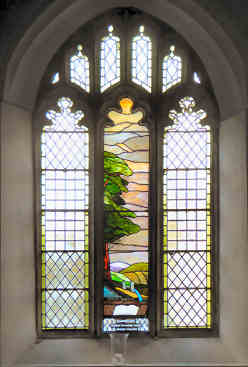
On the same day late in October that I visited St. Werburgh's in Warbstow I also visited nearby St. Mary the Virgin in Week St. Mary. Where St. Werburgh's is built on an ancient site and is almost isolated, St. Mary the Virgin, described by Pevsner as "large and dignified," is at the north end of an extended village, beyond the village square and adjacent to skeletal earthworks known as "the castle." The church, described by Pevsner as "large and dignified," is something of a mix of late medieval centuries, all subject to the usual restoration by the inevitable J. P. St. Aubyn. The first thing to take your attention is the second stage of the tower where a Virgin Mary figure is set in a canopied niche. The tower is 15th century with a high degree of decoration with carved figures on the plinth and above and below the string courses. Inside, the north aisle is 15th century, the south aisle late 14th century and the south arcade has piers of Polyphant stone. The wagon roofs of the north and south aisles were restored by J P St. Aubyn in 1879-81. The font is octagonal, late Gothic in style with coarse carving. Glass in the north aisle is of 1857 by Kempe. There are some excellent carved ceiling bosses. The pulpit is covered in crude linen-fold panelling. Rood stair openings are still in polace. An elaborate grave slab, hanging on a wall, is in memory of John Gayer of Whitestone. Wall hangings include a nice one of the Virgin and Child. Kneelers include an unexpected one of an engine house on a cliff-top.
Week Stained Glass
Week St. Mary Church from the south
Week St. Mary Quire
Wendron, St.
Photographs
More in Churches & Holy Sites
Wenn Revisited
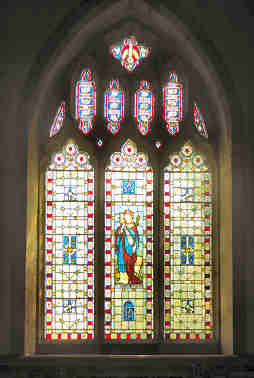
Pevsner's current entry for St. Wenna's church is quite brief, less than half a page. One might therefore expect a church of little interest. I didn't find that to be the case but instead found plenty to enjoy. There is a large free village car park a couple of hundred yards north-east of the church; best to use this and approach the church by road, passing the school on your left and then taking a small gate into the churchyard. The tower is less prominent than it once was. Originally of three stages, the top stage was lost in a partial collapse in 1825. On your way round to the south porch, pause on the south side of the tower to admire some of its detail, including the finely detailed west window over the striking (unused) west doorway. Do note the sundial, not in its usual place over the doorway of the porch but on the west face of the tower; dated 1855, it bears the inscription "Ye know not when." A lot has happened to the church since it was built. The chancel was rebuilt in 1825 and a major restoration was completed in 1889 by J P St. Aubyn (who else?). Compared to Cornwall's grander churches the scale here is relatively intimate. At the east end, the chancel has 19th century decoration, including a reredos of the Last Supper. Glass in the east window is by Powell & Sons and is a striking grisaille with the figure of the Good Shepherd at its centre. The font is possibly of the 12th century, of the Bodmin type with zig-zag decoration, standing on a plain central shaft and supported by four narrow shafts, each topped by a carved head. Rather surprisingly, some fine decorative panels, bearing the Lord's Prayer and the Creed, are hidden away in the vestry. The Lady Chapel is maintained as a Children's Corner and there are a couple of attractive modern hangings.
Werrington, St. Martin of Tours Church
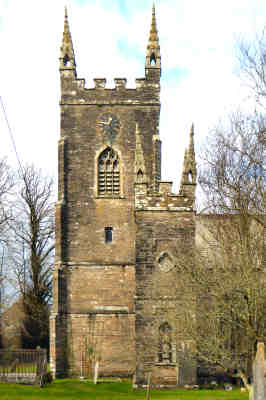
This is about the furthest I have been in search of Cornish churches. Werrington is located on a very minor road a couple of miles north of Launceston and consists of little more than the big house, Werrington Park, its park and gatehouse and its church. This an unusual church for Cornwall in that it dates only from 1742 as part of a reconstruction of the entire Werrington estate. Despite its late date, the church was nonetheless subject in 1891 to a programme of radical restoration of the interior by the ubiquitous J P St. Aubyn, which Pevsner describes as giving sombre dignity to well proportioned spaces. The interior is, however. relatively conventional; it is the exterior which shows unexpected individuality and is worth a close inspection before entering. One's first view, on entering the gate from the lane is only relatively conventional; one expects a tower, the body of the building and a porch; all these you get but you also get not only one tower but also a smaller subsidiary tower attached to it - and a small round tower at the back. What I hadn't expected to see on the exterior was the proliferation of statuary set into the exterior wall; I counted ten examples altogether, including monuments to members of the Drake family and, surprisingly, a headstone of a headstone of 1724 to Philip Scipio, a black servant. Pevsner describes St. Aubyn's interior as "sombre dignity ... well-proportioned spaces." There are two fonts; one Norman, undecorated but for heads on the bottom corners; the other a small bowl on a baluster shaft and dating, like the church itself and the pulpit, from 1742. Perhaps the best feature of the interior is the variety and quality of the stained glass, most of it in the Arts & Crafts or Pre-Raphaelite style. Organ pipes are colourfully decorated, a work of art in itself. Either side of the chancel are small carved wood panels, one of a horseman, the other perhaps of St. Roch, patron saint of dogs. There is a colourful altar cloth and, either side of the altar, banners of St. Sohrgin and the Werrington Mothers Union. There are none of the expected carved bench ends but there is a finely carved pew back. The plain wooden pulpit stands on a limestone plinth.
Wesley's Cottage
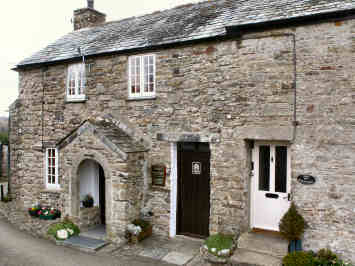
One of the most hallowed Methodist sites in Cornwall, Wesley stayed here on several occasions. But there is much more to the story than that. The cottage was owned by stonemason Digory Isbell. In his absence, his wife Elizabeth gave food and drink to two strangers who, after eating, knelt and prayed 'without benefit of a book'. They were two of Wesley's advance agents. Digory was impressed by the story of the strangers and when Wesley returned to Cornwall a year or so later, he was made welcome and blessed the cottage and its owners. Later Digory, having read a passage in his bible about the Shunamite woman who built a 'Prophet's Chamber' for a man of God, built an extension to his own house - a chapel with a bedroom over - for Wesley and his preachers. Trewint became a flourishing centre of Methodism but, as other chapels were built in Cornwall, the rooms in Trewint fell into disuse and became derelict. Happily, in 1950 they were restored and opened to the public. Wesley Day celebrations are held in May each year in what is believed to be the world's smallest Methodist preaching place. Digory and Elizabeth Isbell are both buried in the churchyard at nearby Altarnun. Local legend has it that if you run round the iron railings surrounding their tombstone twelve times, then put your fingers in your ears, you will hear the bells of heaven.