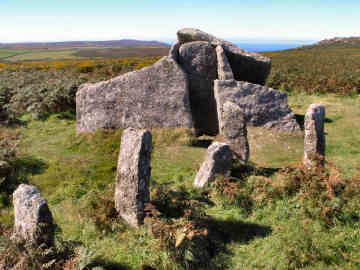
Antiquities
Stone circles, quoits, hill-forts and Celtic crosses from Cornwall's deep prehistory.
56 places reviewed by Oliver Howes
To someone like me who likes to walk on the high moorland, where most are to be found, Cornwall is a real treasure trove of antiquities. In that category I include: neolithic and bronze age burial cairns, dolmens and stone circles; iron age and early Christian era hill forts, small fortified farmsteads, villages, fogous and inscribed stones; major standing stones of indeterminate period; and a few medieval sites like Penhallam Manor. In addition to those sites described here, a number of others of minor importance will be found on my Walking Pages, mostly under West Penwith and Bodmin Moor. Relatively few of these sites can be reached by car or with just a short fairly level walk; these are shown in the index with a *star. Some sites need good walking boots and stamina.
Other categories - bridges, Cornish crosses, cliff castles, boundary stones and old direction signs - can be found on my Miscellanea page. If you would like to consult the experts - and I don't include myself in that category - I suggest you may like to look at:
Showing 56 of 56
BODMIN MOOR
East Moor & Fox Tor
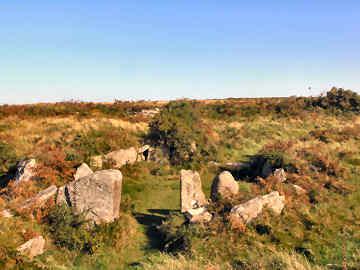
Bodrifty Iron Age Village
I know Carn Euny and Chysauster iron age villages well but had no idea that there was another with substantial remains in West Penwith. It was by pure chance, during a walk from Ca
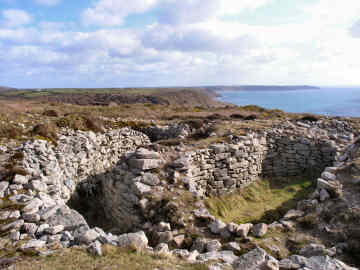
Bollowal Bronze Age Barrow
No one even knew this was there until 1878 when Cornish antiquarian W C Borlase discovered it under mining spoil. There are probably several similar barrows still hidden under the
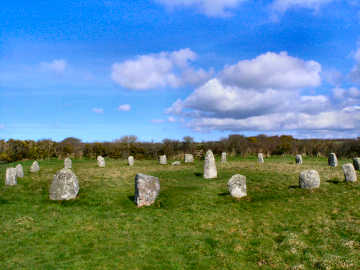
Boscawen-un Stone Circle and Trelew Longstone
In July 2006 I did a figure-of-eight walk from St. Buryan in West Penwith, mostly to find several new antiquities. On the first, southern, loop to the coast I found Cornish crosses
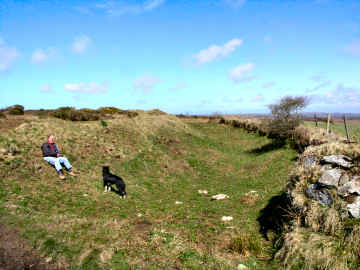
Caer Bran Hill Fort
Bran Hill Fort
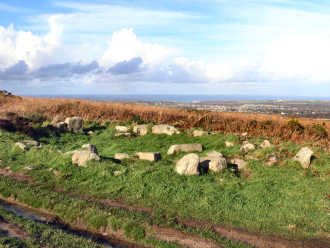
Carn Brea - the hill overlooking Camborne and Redruth
This impressive hill, a ridge a mile long, towers over Camborne and Redruth. Views are superb but mostly to the north. The visible archaeoloogy is something of a disappointment. An
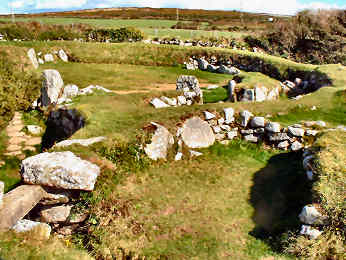
Carn Euny Iron Age Village
Euny Iron Age Village
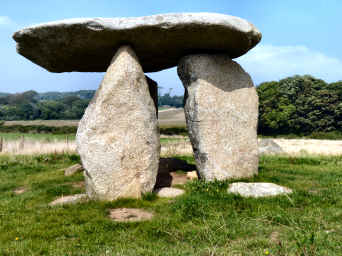
Carwynnen Quoit - or the Giant's Quoit
I first encountered this site when walking the Land's End Trail in an east to west direction in 2007. Carwynnen Quoit, also known as the Giant's Quoit or Devil's Frying Pan, was, w
Castallack Round
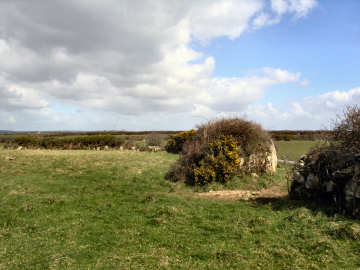
When I walked here with my sister Mary in March 2008, on my first stage of the Penwith Round, I was sufficiently puzzled by what OS102 clearly shows as Castallack Round that I retu
Castle Dore, King Mark's Hillfort
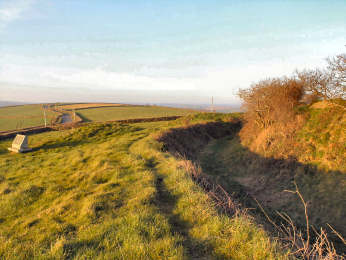
Dore, King Mark's Hillfort
Castle Killibury - a putative Arthurian site
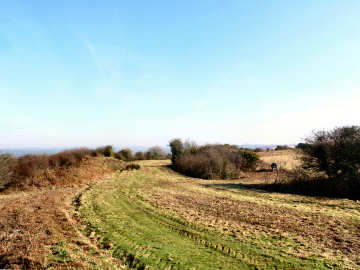
Killibury - a putative Arthurian site
Castle-an-Dinas near St. Columb Major
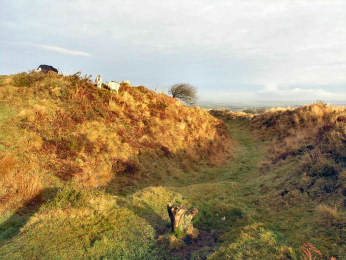
Dinas near St. Columb Major
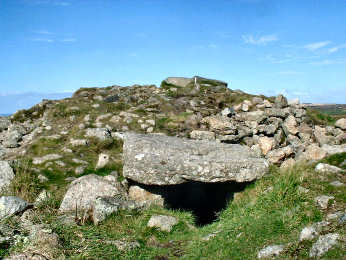
Chapel Carn Brea Bronze Age Tomb
Brea Bronze Age Tomb

Chysauster Iron Age Village
Where Carn Euny has only been partially excavated, Chysauster (its name is actually 'Chy Sylvestra', meaning the houses in the wood) has been more fully excavated since its discove

Ch�n Castle and Ch�n Quoit
Ch�n Castle and the nearby Ch�n Quoit neolithic burial chamber are among Cornwall's least accessible ancient monuments. Footpaths to the site are not signed and you will need to fi
CORNISH ANCIENT SITES PROTECTION NETWORK
ANCIENT SITES PROTECTION NETWORK
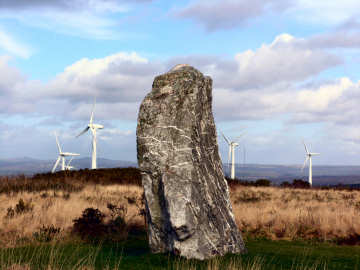
CORNWALL HERITAGE TRUST
HERITAGE TRUST
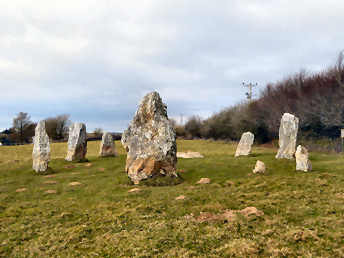
Duloe Stone Circle and St. Cuby's Well
Unusually, this entry appears on three different pages: here under antiquities but also on my towns and villages page and my churches and holy places page. The reason is that, for
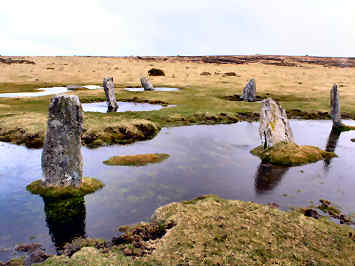
East Moor, Fox Tor and Nine Stones Circle
In early April 2006, having finished walking Mark Camp's Copper Trail, I went back to Five Lanes to investigate an area that I had looked at briefly on the trail and that had attra

Fox Tor, Nine Stones and Clitters Hill
Clitters Hill
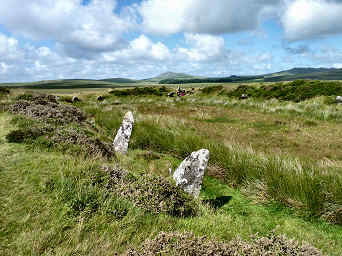
King Arthur's Hall - On OS109 at grid ref: 12963/77623
This is a very puzzling site. There is a rectangular enclosure bank, over six feet high in places and some 160 feet by 65 feet. The inside is lined with apparently random stones, u
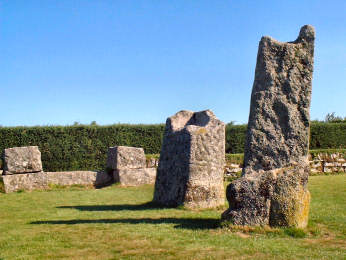
King Doniert's Stones
In a nicely maintained granite-walled enclosure, on the minor road between Doublebois and Minions, are a couple of granite standing stones, with handy car parking by the site. It i
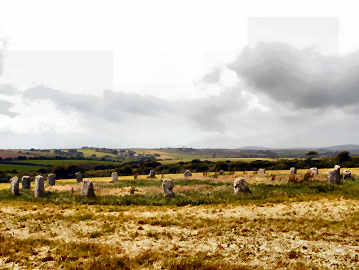
Lamorna - the area to the west of the village
Ever since December 2003, when my sister Mary and I did a round walk from Lamorna that included coast, Boskenna Cross and the Merry Maidens, I had been meaning to return to find th
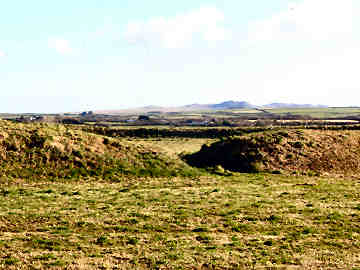
Lanteglos-by-Camelford - Castle Goff and St. Julitta's Well
Having passed close by, on the Camel Ramblers November 2008 AGM Day walk, in dull and wet conditions, I took the opportunity of a fine day soon after to return to Lanteglos to take
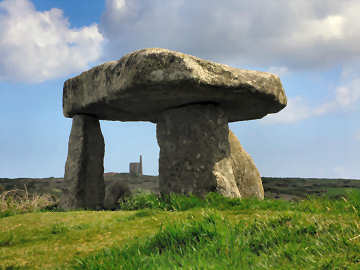
Lanyon Quoit
Located just off the road from Penzance and Madron to Morvah, Lanyon Quoit, along with Trethevy Quoit, is just about Cornwall's most accessible quoit. A late neolithic portal dolme
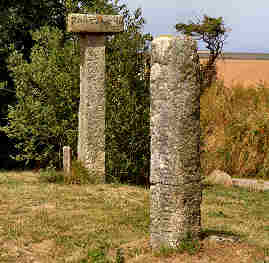
Long Cross Inscribed Stone
I encountered Long Cross inscribed stone - presumably an early Christian period memorial stone - on a round walk from Chapel Amble that took in St. Endellion church and the old man
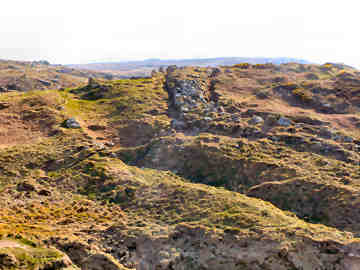
Maen Castle - Cliff Castle near Land's End
When I was last here - in September 2005 - I could never have guessed that Maen Castle was perhaps the most impressive cliff castle in Cornwall, Treryn Dinas notwithstanding. Then
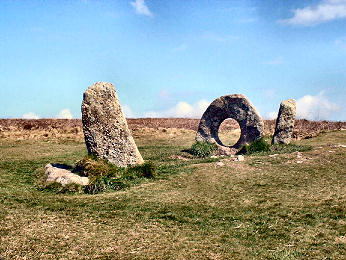
Men-an-Tol Stones
Off the narrow road from Morvah to Penzance is one of Cornwall's most fascinating ancient monuments, Men-an-Tol. Park opposite the small former chapel at Bosullow and walk up a wel
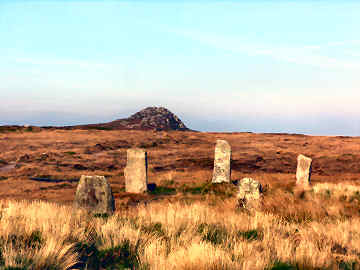
Nine Maidens Stone Circle in West Penwith
Not to be confused with Nine Stones of Altarnun or with Nine Maidens stone alignment near Wadebridge
Online Mapping - Cornwall Council's Mapping Web Site
Mapping Web Site
OTHER SITES
*Arthur Stone
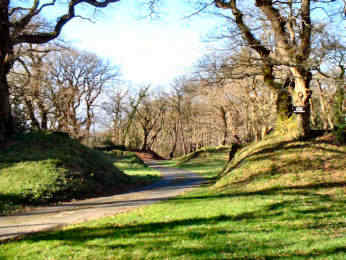
Pencarrow Iron Age Hill Fort
When we visited the Pencarrow estate for the snowdrops in February 2004, for the first time we drove in on the main drive. We were amazed to find that the road snaked through ancie
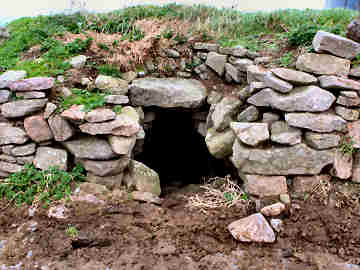
Pendeen Vau Fogou
In Cornwall the word is 'fogou', in Scotland 'earth house', in France 'souterrain'. No one has any idea of the purpose of such an underground structure. Guesses include grain store
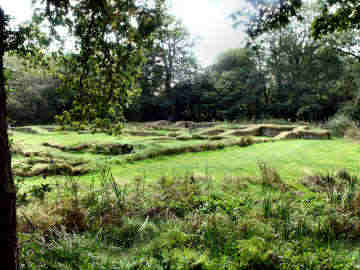
Penhallam - ruins of a very early Moated Manor House
This is both a remarkable and a confusing place. Start with confusing. Managers English Heritage call it Penhallam, but a farm a mile away is called Penhallym. Cornwall's Archaeolo
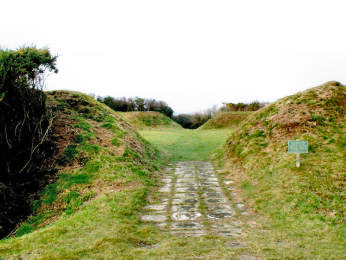
Piran Round near Perranporth
There are a hundred or more of these 'rounds' in Cornwall. Popular belief is convinced that they are 'plen-a-gwary' or 'playing places', amphitheatres created to stage the Cornish
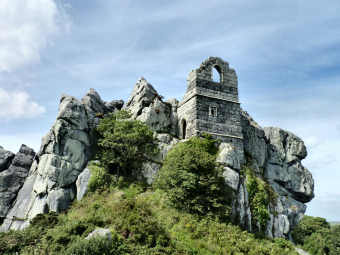
Roche Rock
On the north-western edge of the china clay fields just to the north of St. Austell, and just south of the unprepossessing village of Roche, is a granite outcrop about 100 feet hig
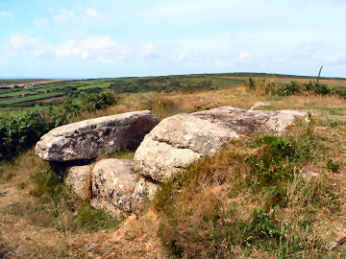
Sancreed Beacon
I had no idea this existed until I spotted a long car park, just a little west of Sancreed church. Wondering what it was for, I investigated and found an information board telling
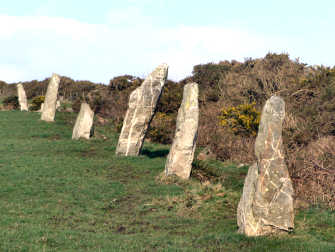
St. Breock Downs and the Surrounding Area
Breock Downs and the Surrounding Area
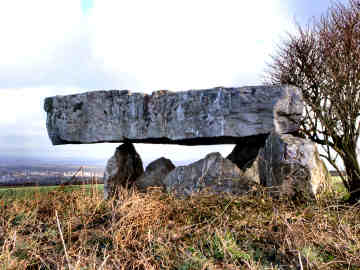
St. Breock Menhirs and Pawton Quoit
and Pawton Quoit
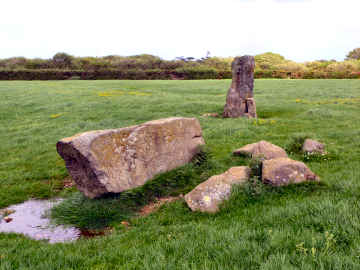
St. Keverne and the Surrounding Area
Keverne and the Surrounding Area
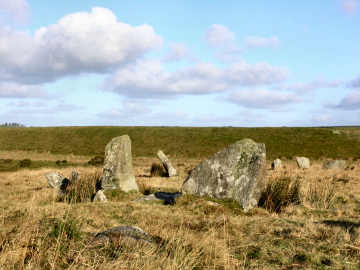
Stannon and Fernacre Stone Circles
On a cold sunny day in late January 2008 I set off to find three stone circles on Bodmin Moor - Stannon, Fernacre and Louden. Stannon is to the south of the china clay pit and I wa
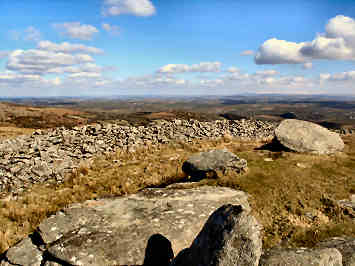
Stowe's Hill near Minions
The most concentrated group of interest on Bodmin Moor is on the south-eastern edge of the moor at Minions. A short walk north from the western car park will bring you to The Hurle
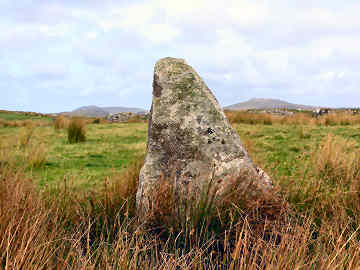
Stripple Stones
I sought out Cornwall's largest - and most unusual - stone circle during a walk in September 2006 that took in King Arthur's Hall, Garrow Tor and Hawk's Tor. The Stripple Stones is
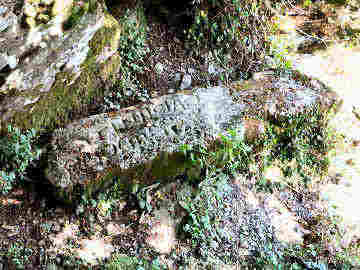
The Arthur Stone at Slaughterbridge, the legendary Camlann
Arthur Stone at Slaughterbridge, the legendary Camlann
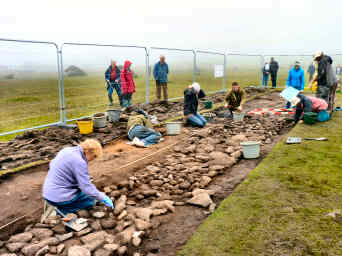
The Crystal Pavement at the Hurlers
Crystal Pavement at the Hurlers
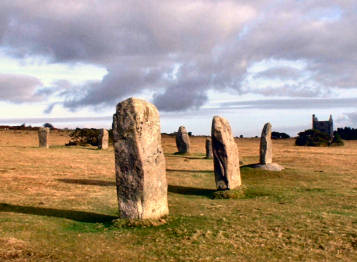
The Hurlers and Pipers Standing Stones
Hurlers and Pipers Standing Stones
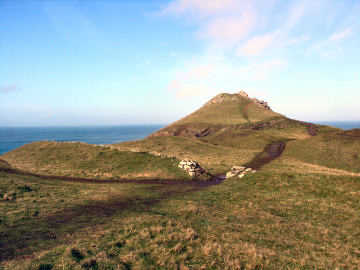
The Rumps
Rumps
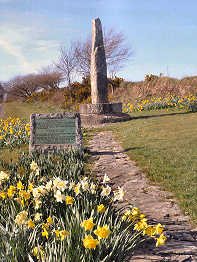
The Tristan Stone
Tristan Stone
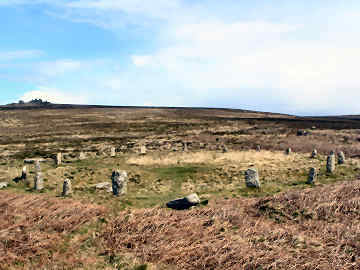
Tregeseal Circle on Carnyorth Common, south of Trewallard
In early July 2006 I headed for West Penwith in search of more antiquities. After spending some time at Sancreed, I parked at Geevor Mine in Trewellard - not far from St. Just and
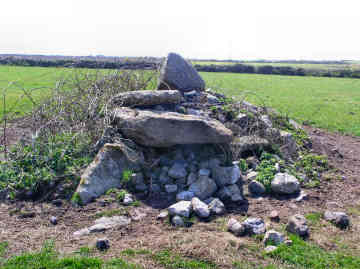
Tregiffian Vean Chambered Cairn near Land's End
The fact that there is a better known Tregiffian neolithic long barrow close to the Merry Maidens in the Lamorna area confused me for a long while. So in April 2008, when doing a w
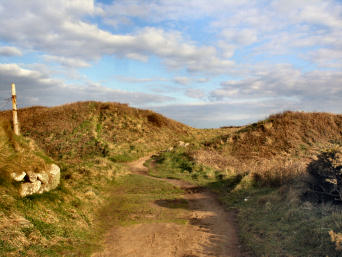
Treryn Dinas Cliff Castle
This must be the largest of Cornwall's cliff castles. Depending on who you believe, there are either three or four lines of ramparts. I make it three. A massive landward rampart (r
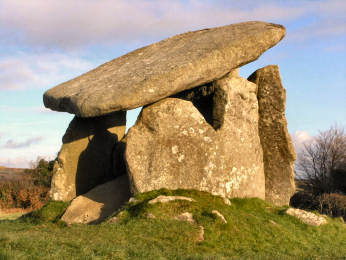
Trethevy Quoit Portal Dolmen
Trevethy Quoit is the best example in Cornwall - and one of the best that you will find anywhere - of what the archaeologists describe as a neolithic portal dolmen, a massive 4000
Trevelgue Head Iron Age Promontory Fort
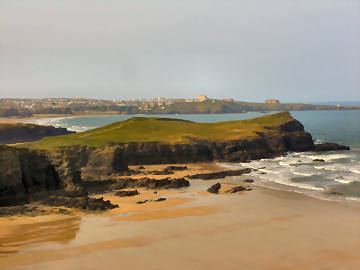
If you look at the Modern Antiquarian you will find some confusion about Trevelgue Head Promontory Fort at St. Columb Porth. Phil's fieldnotes are immaculate but a number of photog
Warbstowbury Hill Fort
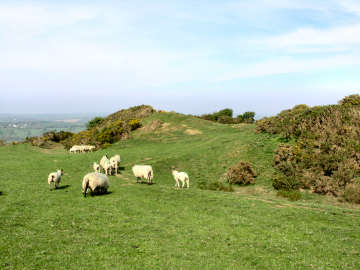
The name may look very un-Cornish but then you are are in north-east Cornwall where the people, and therefore the place names, are mainly Anglo-Saxon. The village of Warbstow proba
WEST PENWITH
PENWITH
Zennor and Mulfra Quoits
Quoits