William Murdoch - Scottish born but invented in Cornwall
Murdoch - Scottish born but invented in Cornwall
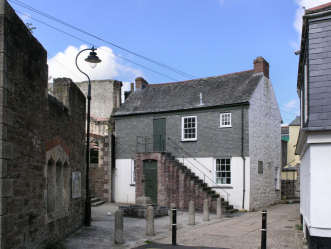
Cornishman Richard Trevithick is the man who is celebrated in his home town of Camborne - and rightly so - but a Scot who worked in adjoining Redruth may well deserve the credit for setting Trevithick on the road to fame. Murdoch was born in Ayrshire in 1754 and in 1776 moved to Birmingham to work for the most successful makers of steam engines, Boulton and Watt. In 1779 the company moved him to Cornwall to work as their Senior Engine Erector, a job he held for 20 years. Had he had his company's support for his talent as an inventor, it might have been he who received the credit that Trevithick now enjoys. In 1780 Murdoch acquired the Redruth house now known as Murdoch House and opened a foundry at the back. There he worked on his inventions. In 1784 he produced a small working model steam road vehicle, which is said to be in Birmingham's Science Museum (but you can't find it on their web site). In 1792 he installed the world's first gas lighting in his own home. In 1794 he built a large steam powered road vehicle - lighted with gas lighting - and is said to have driven it from mine to mine in the course of his work. Sadly there is no record of it. You have to wonder just what Murdoch might have achieved given the right backing.
Murdoch House in Cross Street in Redruth
Image of Murdoch Flyer replica
Sir Goldsworthy
More in Miscellanea
Wind Turbines - What a waste of money and effort
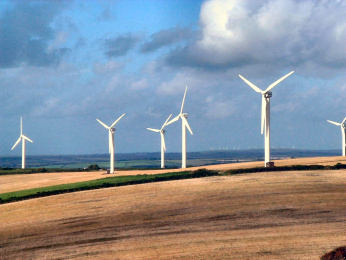
An unexpected and controversial feature of the Cornish landscape is the wind farm. Unexpected because you somehow assume you will find wind turbines in remote Scottish or Welsh places. Controversial because not only do some find them a terrible blot on the landscape but there is a very great deal of doubt as to whether they truly serve any useful purpose. Heavily promoted as the green answer to renewable energy production, the wind turbine produces incredibly expensive power that has to be heavily subsidised. It is far less efficient than its promoters like to suggest since it cannot operate in too little or too much wind and even has to draw power from the grid if stationary for too long. Worst of all, since it cannot be relied on, it requires 100% back-up of stand-by conventional power plant. After publication of reports in 2004, about new and safer methods of nuclear generation and waste storage, I am surprised that successive governments fail to pursue the nuclear option. Whilst we are strongly against wind turbines on practical grounds, and understand the controversy about the thrumming noise a wind farm can produce, we really don't mind the look of them. Anywhere in North Cornwall we are usually near one farm with a couple more in sight. With only a dozen or so turbines to a farm, they can look quite elegant against a background of sky or sea.
And Even More Thrussell
Even More Thrussell
And yet more Thrussell
Thrussell