St. Gennys
Gennys
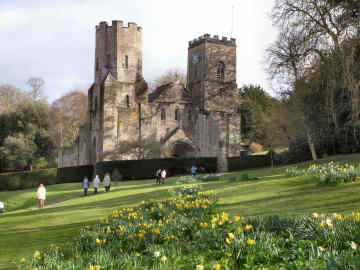
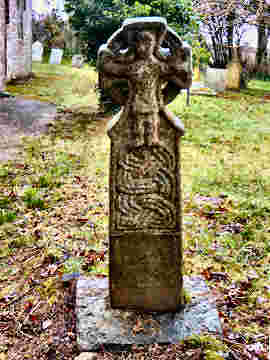
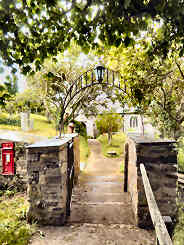
I was last in St. Gennys way back in 2009, when I was walking the complete Cornish Coast Path from the Devon border in the north at Welcombe Mouth to the Tamar ferry crossing at Cremyl opposite Plymouth. At that time I didn't look inside the little church. This time, in mid June 2018, I had a churches day, revisiting Lesnewth and St. Juliot and looking inside St. Gennys for the first time. St. Gennys is just to the north of Crackington Haven but where the latter usually bustles, St. Gennys is a tranquil spot and consists only of the church, Churchtown Farm, Churchtown Cottages, and the former School House, now holiday apartments. If you follow the National Trust sign to the Coast Path you soon come to Pencannow Point, from whose high and vertical cliff there are fine views to Crackington Haven below and on to towering Cambeak Point with its folded rock strata. St. Gennys Church is tucked away in a small valley, its neighbour the old School House. A filled-in coffen stile leads through a wrought iron gate next to a post box and in to the churchyard. Immediately ahead of you is what may have been the base of a Cornish Cross. The earliest part of the church, the lower two stages of the tower, and the walls of the chancel, are from Norman times; the tower is topped by striking crocketed pinnacles. Notable features inside include a 12th century font, a fine altar cloth, slate wall memorials, an interesting, possibly medieval, chest, a simple pulpit on a stone base, remains of altar rails and some 20th century stained glass.
St. Gennys Church Entrance
St. Gennys Church Tower
St. Gennys Church Pulpit
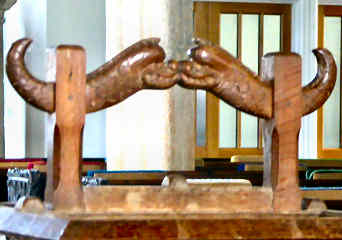
After my visit, I re-read my Pevsner and realised I had missed a reference to bench ends being made into a "Litany Desk." I returned the following weekend and there was the Litany Desk in the chancel. It is indeed made of old wood, as is a small nearby shelf, but only one of the uprights seems to be a former bench end.
St.