Cornish Place Names
Cornish places names are a constant source of puzzlement to most visitors and, indeed, many of the Cornish. Pronunciation is a major puzzle to many, as is the close proximity of English and non-English names in some parts. For instance, on one bank of the River Camel is Wadebridge (Saxon bridge by the ford) on the other Egloshayle (Cornish church on tidal water), now forming part of Wadebridge. The answer lies in when places were named. Until Tudor times little was spoken except Cornish so most places names were in that Brythonic Celtic language. As English influence became stronger, new settlements might get English names, some old ones might be re-named. For example, Padstow was Petrocstow, the stow being a Saxon holy place; and Slaughterford, once Cornish Melorn, is the Saxon ford by the marsh. Perhaps a quarter of place names are in English, these predominantly in the more English settled north east. A few have both Cornish and Saxon elements and a very few derive from the Norman-French. And, even where settlement names are English, farm names are usually still Cornish. Among the commonest prefixes are Tre farm, Pol pool or hollow, Pen head or end, Chy and Bos dwelling, Porth cove or landing place and Ros promontory. The vast number of Saint prefixes reflects the evangelisation of Cornwall by Irish and Welsh priests in the dark ages.
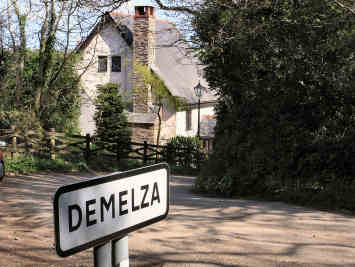
Demelza - Cornish Dyn Malsa, Maelda's fort
Craig Weatherhill's Place Names in Cornwall is the bible
Cornish
More in Miscellanea
Cornish Stiles
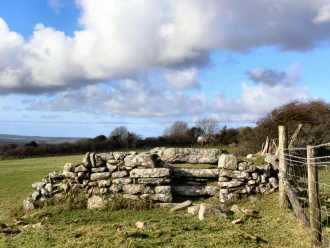
Stiles
Cowslip Quilting Workshops at Newhouse Farm near Launceston
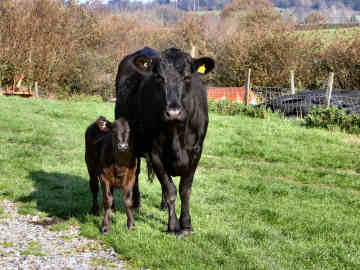
This may seem like an odd image to use in an item about quilting workshops but then Jo Colwill's business runs in and from a purpose built workshop set in the midst of farm buildings on husband Steve's organic dairy farm where the Colwills have farmed for about a century. Jane has been a Cowslip devotee for some years now, has attended classes there and has had help from Jo with some of her more difficult quilts. She and her friend Mary have made regular trips to Cowslip to admire the works displayed and to buy supplies. It was during the major BSE scare, when the Colwill's feared for their dairy farm, that Jo decided she could make a living from her quilting skills. The business has grown and a vast range of classes and workshops are held - not just quilting but also knitting, appliqu�, silk painting, stencil work, basket making and more. The well-stocked shop carries a range of fine fabrics, threads, accessories, tutorial books and hand-made greetings cards. A caf� (open daily 10-5) serves morning coffee, light lunches and cream teas. Lunches include a variety of baguettes and filled jacket potatoes and the specials board includes home made desserts. Jane recommends the place, the shop and the food. If you want to know more, do take a look at Cowslip's web site.
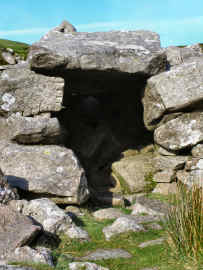
Daniel Gumb - Stonemason. self-taught mathematician
Gumb - Stonemason. self-taught mathematician