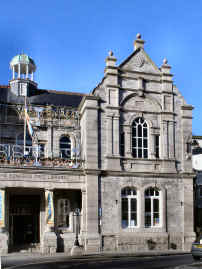
Falmouth Art Gallery
That Falmouth's art gallery has surprisingly good collections is largely thanks to South African businessman Alfred de Pass who honeymooned in Falmouth in 1888 and built a holiday home there in 1895. An avid collector, he not only gave substantial numbers of paintings to Falmouth, he also paid for the Library to be adapted and extended to house his gifts. Other donors include the local Fox family, creators of so many of Cornwall's finest gardens, including Trebah and Glendurgan.
The permanent collection is mainly of 18th to 20th century works and tends to concentrate on British (including Cornish) artists and their landscapes, maritime paintings, other 'plein air' works and local topographical prints. Notable artists represented include late Newlyn School artist Henry Scott Tuke, Frank Brangwyn and Sir Alfred Munnings. There are some superb maritime battle paintings by Thomas Luny; Pre-Raphaelite paintings and drawings by Burne Jones and John William Waterhouse; local land and seascapes by William Martin. It is quite pleasing to find local topographical prints and engravings (including a couple by Turner) showing a very different Falmouth of bygone days. Amongst changing temporary exhibitions we especially enjoyed one on Portscatho artists; others may include ceramics, textiles and sculptures - but often occupy too many rooms.
Falmouth Art Gallery
Ask if you would like to see permanent collection items not on show
To fill the space
CORNWALL
Photographs
More in Museums & Galleries
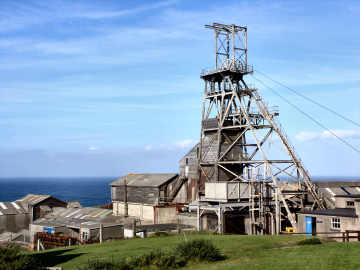
Geevor Mine Museum
Geevor is at the northern end of the massive St. Just complex of former tin mines that runs from Pendeen Watch to Cape Cornwall - Geevor, Levant, Owles, Botallack, Edward, Kenidjack, Cape Cornwall and many more. Although Geevor had been going in one form or another since around 1700, the present Geevor Mine was effectively started in 1911 by Cornish miners who had returned from South Africa during the Boer War. As a modern mine, it was a success all the while the tin price stayed high but, when the price collapsed in 1985, even a modern mine like Geevor felt the pinch and closed in 1990. It re-opened in 1993 as a museum.
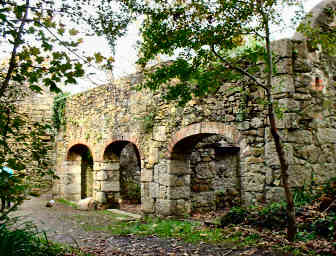
Harveys Foundry of Hayle - The Great Cornish Engineers
Walking around the run-down town of Hayle these days, you would never guess that the industrial heart of Cornwall once beat strongest here. Yet in the mid-18th century Hayle boasted perhaps 5000 jobs in industry. The National Explosive Company, the Cornish Copper Company and the docks were all major employers but the greatest of them all was Harveys.
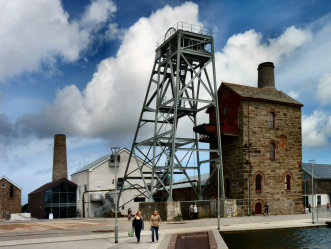
Heartlands
Camborne, Pool and Redruth suffered badly from mine closures. The Heartlands project has been central to plans to regenerate a run-down part of Pool. Completed at a cost of �35 million, largely lottery money, it was officially opened by the Duke and Duchess of Cornwall on a soaking wet Monday 2nd July 2012. Jane and I were luckier, we had been there the day before in sun. Heartlands is on the redundant site of South Crofty mine's Robinson's Shaft; we had walked there from Tuckingmill Valley Park by way of the Portreath Branchline Trail, taking us right past South Crofty's New Cook's Kitchen Shaft, where re-opening is expected in 2014 or 2015. This is quite an extensive site and, apart from parking and food, is free. Many old mine buildings and offices have been restored and house important machinery and exhibitions covering geology, mining and social history. There is a 270 degree wrap-around mining history film - we found it a bit 'arty'. To see the magnificent beam engine in Robinson's Shaft engine house you will have to join a guided tour but I don't think you will see it working. Highlight outside is the imaginative Diaspora Botannic Garden with individual gardens representing the countries to which Cornish miners emigrated in hard times. Already good, when mature this large and varied garden should be something special. There are also extensive lawns, a row of craft studios and shops and an impressive Adventure Playground, designed by local children.