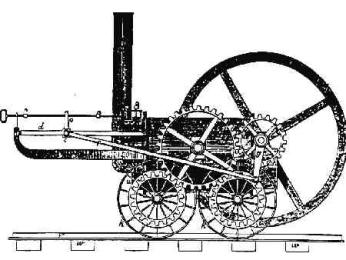
Richard Trevithick
Trevithick
Devon engineer Thomas Newcomen devised the original steam-pressure beam engine, Scot James Watt first refined it, but it was the high-pressure engine of Cornishman Richard Trevithick (1771-1833) that enabled the Cornish mines to flourish, pumping deep shafts and raising the tin and copper ore. In 1801 he built a steam-powered road vehicle, known as 'Captain Dick's Puffer'. In 1802 he built his remarkable 'London Road Carriage' and in 1804 his 'Penydaren' locomotive hauled 10 tons and 70 men for 9 miles near Merthyr Tydfil in South Wales. A model of 'Penydaren' can be seen in the Royal Cornwall Museum in Truro; a replica is at Cyfarthfa Castle in Wales. Born at Illogan, Trevithick was raised in Penponds, off the Helston road on the southern edge of Camborne. His childhood home, cared for by the Trevithick Trust, is open only on Wednesday afternoons from April to October. The little thatched cottage is filled with memorabilia. A small memorial to him stands on a road that passes to the east of South Crofty mine, not far from the Heartlands and Cornish Mines and Engines sites and his statue overlooks the junction of Commercial Street and Church Street. However his true memorial is 'Trevithick Day', celebrated in Camborne on the last Saturday of April, when the town takes to the streets to enjoy brass bands, choirs, dancing and a parade of steam engines.
Trevithick's Penydaren Locomotive
Trevithick Day report below
More in Museums & Galleries
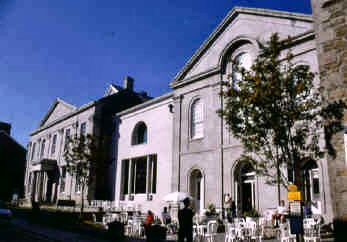
Royal Cornwall Museum in Truro
Opened in 1818, at about the time when Cornwall’s tin-mining prosperity was first beginning to wane, the Royal Institution of Cornwall was founded primarily to promote knowledge about the archaeology, history and culture of the county. Not surprisingly, its major exhibit is the internationally renowned Rashleigh Collection of Cornish Minerals - which includes the world's largest crystal of copper ore - but there are other good collections, too. Outstanding are the De Pass Collection of English and European Old Master drawings and the collection of paintings by Cornish artists including portraitist John Opie and Newlyn School member Henry Scott Tuke. Applied Arts exhibits include pewter, pottery, porcelain, scrimshaw and Japanese ivories and lacquer-work. Local History and Archaeology are both well represented - highlight is three early Bronze Age collars of beaten gold, the only such ones found in England - and there is a scale model of Trevithick's 1804 Penydaren locomotive. There is a good caf� (in its own art gallery) and a well-stocked shop. Whilst in Truro you will also find a twentieth century cathedral and plenty of good shops, caf�s and restaurants.
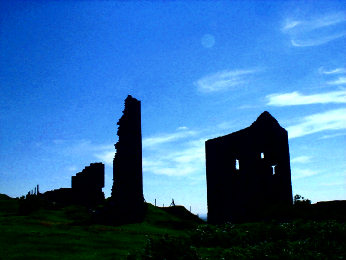
South Caradon Mine
Caradon Mine
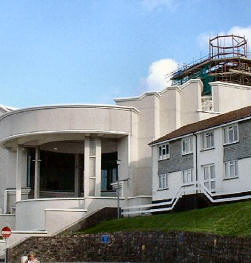
Tate Gallery, Hepworth Sculpture Garden & Leach Pottery
Tate Gallery St. Ives