Pillaton
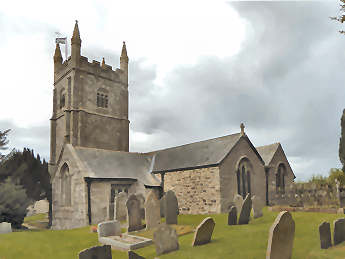
It may be in Cornwall, albeit not far west of the Tamar, but its name is not Cornish but Old English, pila tun meaning "the settlement defended by stakes". Not that there is any sign of any defensive works there today. A small village, with a population of less than 500, Pillaton nevertheless can boast plenty of interest. The Weary Friar hotel claims 12th century origins as a coaching inn. It has 12 letting rooms, bar and restaurant and a fairly extensive menu. I only had coffee but found the staff very pleasant. Next to the Weary Friar is St. Odulphus Church, basically a 13th century building with three-stage tower, nave, aisle and south transept. The porch has a wagon roof with carved bosses. The interior of the church is fairly plain, notable only for the memorials in the Tillie Chapel in the transept. This is the Tillie family of Pentillie Castle which stands high above the Tamar. One wonders why Tillies should be commemorated here when there are several churches much nearer the home. I also visited Quethiock and Tideford, the latter often mispronounced as spelt but really Tiddyford for its river, the Tiddy.
Pillaton, St.Odolphs Church
Pillaton, the Weary Friar Inn
Photographs
More in Towns & Villages
Polkerris
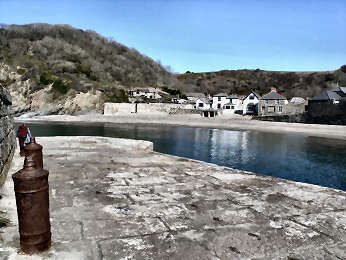
What a contrast to Par, just a mile away across St. Austell Bay. Par is heavily industrial, its waterfront dominated by the vast former china clay works and its associated harbour, and by a holiday park set immediately above the beach. Polkerris might be another world entirely. Both are in the old parish of Tywardreath - it means 'House on the Strand' and was the inspiration for Daphne du Maurier's novel. Polkerris is reached down a narrow steep lane off the road from Par to Fowey. Parking in the village is non-existent, unless you are a resident or are lunching in the Rashleigh Arms and are lucky enough to get a space in their small car park. Happily there is a large car park a few hundred yards back up the hill, a clear sign that Polkerris gets very busy in season. I visited in March 2005, and even then the car park was fairly well used. The village has a long fishing history, though it no longer has a fleet. As far back as Elizabethan times, however, it could boast the largest pilchard cellars in Cornwall, still there. Also there is the harbour wall and quay built by the Rashleigh family, on whose estate, Menabilly, it stood, in the 18th century. Prosperity didn't last and now Polkerris relies on its pub, caf�s and summer visitors. The Rashleigh Inn is open all year. Sams on the Beach is recommended for its food

Polkerris
In July 2018 we drove Mick and Margaret, our friends and next-door neighbours to the south coast, to Polkerris near Fowey, and enjoyed an excellent leisurely lunch at Sams on the Beach. Sams also has a city venue at 1-2 New Bridge Street in Truro; we hope to try it before too long. To older and creakier folks like me Polkerris has one big disadvantage: unless you are lunching at the Rashleigh Inn, and are able to find space in its car park, you have a five hundred yard walk down from the pay car park. Not too bad but, for me, much tougher on the way back.
Polperro
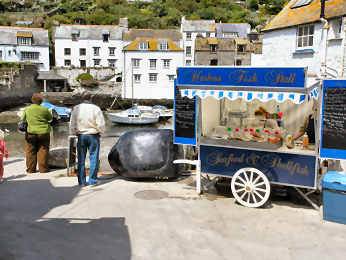
We are not very keen on the commercial aspects of Polperro. Streets bustling with day visitors almost elbowing one another for room to move; shops, restaurants and caf�s all designed to part them from their money. We prefer to approach by the coast path from Looe, avoiding the crowds and enjoying the views from above. We love Polperro's harbour with its small fleet of fourteen working boats, coming and going through a sea-lock which keeps the harbour in permanent water. Around the harbour are a museum of smuggling and fishing, a fish market, net stores, a stall selling fresh fish and shellfish and two of the better pubs, we have enjoyed the Blue Peter though we also like the look of the Lugger. At the landward end of the harbour a bridge crosses the little River Pol that feeds the harbour. Shops and homes back onto it, one of them jettied out over the stream and known as the 'House on Props'. As there are only fourteen working fishing boats, most fishermen's cottages are now artists studios or holiday homes. Not a place for busy times but great in the quiet season. There is no parking in the village itself. Instead you park in a large car park at the head of the valley and walk down or take the bus or horse bus.