Gorran Churchtown
, St. Goranus,
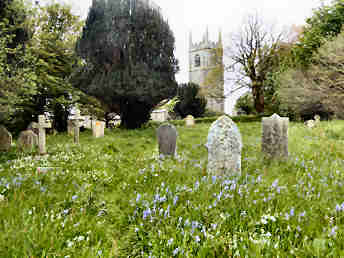
In mid-May 2016 I had an outing to the south coast. My main purpose was to take photos of Mevagissey harbour with the tide in and sun out, something I have failed to do more than once before. I failed yet again: the tide was in but the sun refused to appear. In Gorran Churchtown I was able to park in the large car park of the Barley Sheaf Inn (see below), not far from the church. I spent some time in both churchyard and church. As you can see from the photo, the churchyard is a mass of wikdflowers in Spring. In the forecourt, before the lych gate, is the village war memorial and the truncated shaft of what appears to be an old Cornish Cross. The church is dedicated to St. Goranus; He is said to have come first to Bodmin from South Wales. Meeting with St. Petroc, he was persuaded to cede Bodmin to Petroc and made his way south. Beyond the porch is a massive barrel shaped vault, with the legend Resurgemus WSG 1813. Whoever WSG was, I don't think he has yet risen again. The present church, a rebuilding of a Norman one, is mainly of the 14th and 15th centuries and consists of nave, two aisles, tower and Lady Chapel. The tower once bore a spire, actng as a daymark for seamen. Notable early features include 53 carved bench ends, a carved pew, the Norman font of around 1180, and a replica of a 1510 brass. Attractive woodwork is 20th century as is the carved pulpit.
Round walk from Portmellon includes Gorran Churchtown.
More images of St. Goranus Church
Gorran's churchyard is colourful in Spring
The Barley Sheaf Inn (May 2018) re-opened recently after a complete interior makeover, owned now by descendants of the original owner. The menu is extensive, perhaps a bit gastro-pub for some but they do excellent fish and chips and a good range of lunchtime sandwiches.
More Images of St. Goranus,
More in Churches & Holy Sites
Grampound
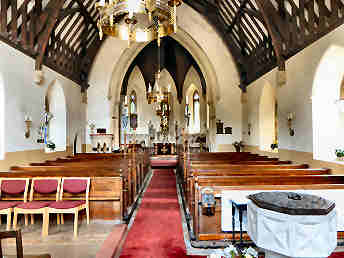
St. Naunter's Nave
Grampound, St. Naunter's Church
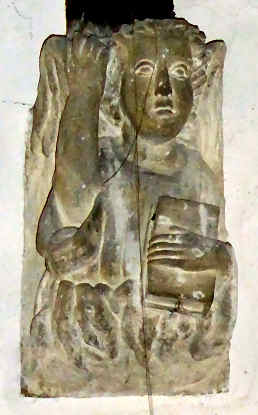
There are two Grampounds, Grampound Road on a north-south country lane and Grampound village on the A390, halfway between Truro and St. Austell. At first sight it appears to be a one street village, climbing a gentle hill from the infant River Fal. However, there is more development along side streets than on the main road itself. Near the river crossing is the Primary School, behind it a Community Centre, Village Shop and Playing Field. Opposite, Mill Lane leads to the disused Town Mill, once operated by a leat off the River Fal. On the main toad, halfway up the hill is the Dolphin Inn, where I have stopped for coffee. Just past the pub is the present focal point of the village, the village hall and church, outside them the remains of a tall (presumably) market cross, its head missing. The village hall is handsome small building with a slate hung clock tower. The adjacent church is surprisingly small. Built in 1421 as a chapel of ease to the far larger and more important St. Crida's in nearby Creed, St. Naunter's was in ruins by around 1820. It was rebuilt in 1869 and has an unexpectedly lofty interior and good 19th century fixtures and fittings. The chancel is most attractive with intricate reredos and colourful altar cloth. Roof corbels are angel figures. There is some pleasant stained glass. More images of St. Naunter's Grampound
Gulval, St. Gulval's Church
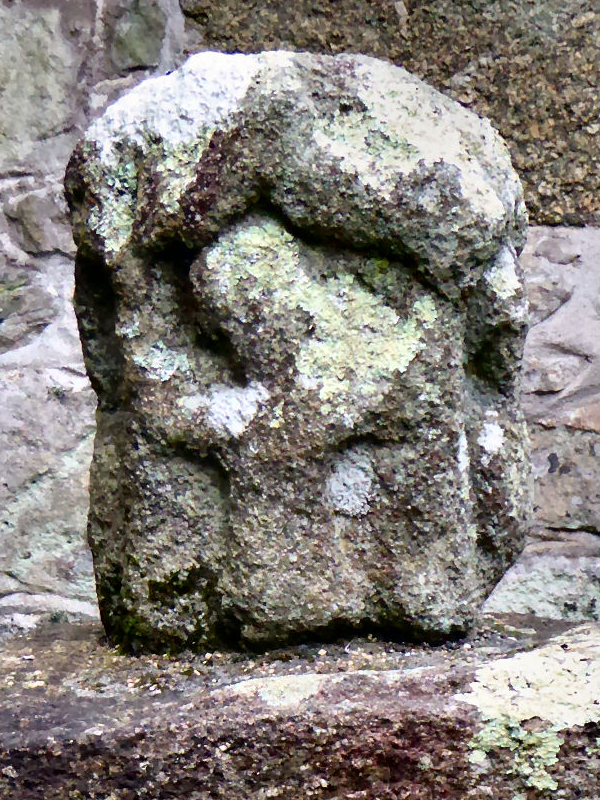
On the same late December 2018 day that I visited St. Elwyn's Church in Hayle I took the opportunity to re-visit St. Gulval's Church in Gulval, just north-east of Penzance. To my surprise the church was firmly locked; it had been open when I was there on New Year's Eve in 2016. So at least I have some interior photos from that 2016 visit, which I can use in this entry. The church is approached from two directions; from the east by a broad flight of steps; from the south by a lych gate, bearing a couple of increasingly illegible inscriptions. The first thing to note, before entering the church is the collection of artefacts just to the left of the porch. There you will find an inscribed stone, an upside-down cross shaft and an eroded lantern cross-head. The oldest unaltered part of the church is the three stage tower of 1440. The body of the church was originally of the 13th century but much altered and restored in Victorian times by J P St. Aubyn; it consists of nave, south aisle and north transept. The ceilings are conventional, except for the chancel's which is both elaborately and colourfully panelled. Beyond a relatively crude chancel screen an unusual wooden altar bears the arms of, presumably, the Kymiels and the St. Aubyns, as also does the font. Stained glass is Victorian. The pulpit is of carved wood on a marble base, behind it carved panelling. Bench ends include both old and new.