Launcells
St. Swithin, Launcells near Strattton,
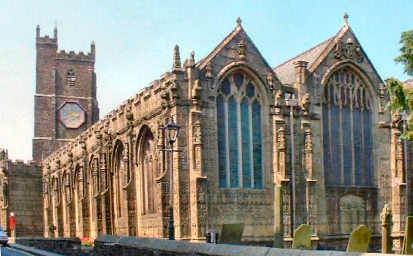
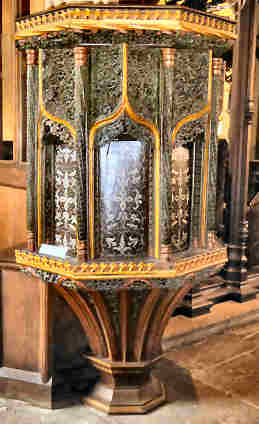
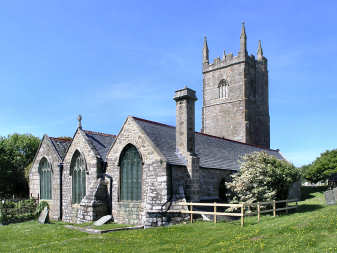
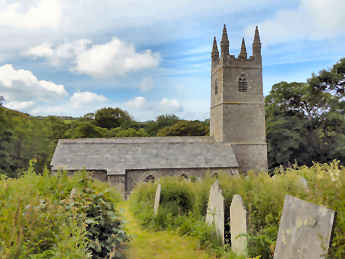
I visited Launcells, tucked away apparently in the middle of nowhere, when on my way to Tamar Lakes for a walk there and on the Bude Canal. Launcells, as a settlement, is almost non-existent, just the church, a farm and a cottage. The church of St. Swithin, dating mostly from the 15th and 16th centuries, is set on a bank above one of the arms of the little River Neet. By the river is St. Swithin's holy well. Typically Cornish, the church has a nave, one aisle and tower of granite, one aisle of Polyphant stone. The tower has four crocketed pinnacles. Inside are three high wagon roofs with carved timbers. There is a Victorian Gothick reredos below the east window. Some flooring is of Barnstaple encaustic tiles, decorated with lions and, of all things, what appear to be pelicans. But the woodwork is what takes the eye, even more so than in most Cornish churches. In the north aisle are a Georgian pulpit, tester and box pews. The south aisle has Jacobean screens, perhaps part of a former family pew - and a monument of an armoured Sir John Chamond. Pride of place goes to the superb Tudor bench ends, each panel an allegory for a bible story. A spade represents Christ the gardener. Two footprints on a rock represent the Ascension. Launcells is signed from the Stratton to Holsworthy road. Ample parking but please heed a warning not to take the vicar's space.
The church is usually open from about 10 a.m.
Launcells church, on a bank above the river
St.