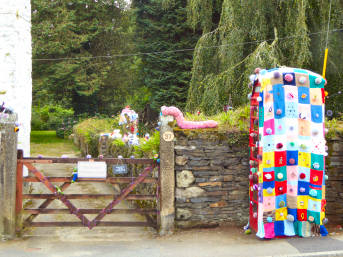
St. Neot Church Flower Festival 2017
Flower Festival 2017
We are very fond of St. Neot village and especially of its church with its superb stained glass. So when we learned that there was to be a flower festival in the church at the end of August 2017 we jumped at the chance of going. There was a small charge (for charity) to enter the church but it was well worth it for the superb and imaginative arrangements, including a circular flower carpet. Refreshments included some surprisingly good Cornish Pasties. We walked round the rest of the village, too, including what most people will have missed, the now well-established Comumity Garden in the valley below the village. The statue of St. Neot is there, with a fawn and a fish, his symbols.
Colourful phone box
St. Neot Statue
Church Flowers
St.
Photographs
More in Churches & Holy Sites
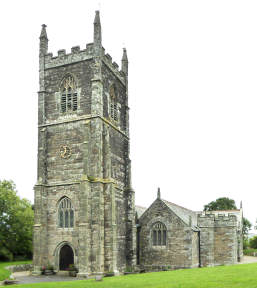
St. Newlyn East, St. Newlina's Church
Newlyn East, St. Newlina's Church
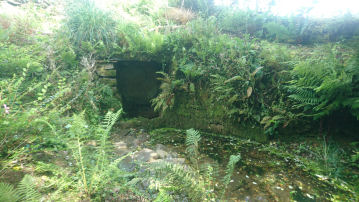
St. Nonna and her Holy Well
Nonna and her Holy Well
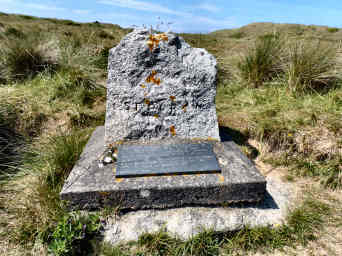
St. Piran - Patron Saint of Cornish Tin Miners
St. Piran is patron saint of Cornish tin miners. It is thought that he was born in Ireland in around AD480, schooled in South Wales and returned to Ireland to found Clonmacnoise monastery, where he was known as Ciaran. He was then captured by heathen Irish who tied him to a millstone and threw him over cliffs during a storm. The storm abated and Piran floated across the sea to Cornwall where he built a hermitage on the vast Penhale sand dunes. He died at his hermitage. St. Piran's Oratory, claimed to be his original chapel although it may date from the 7th or 8th century, was excavated in the 1830s but lost again under the sand. At one time it was hidden under concrete but was later re-excavated. Now a stone and plaque mark its position, about equidistant from a modern cross and the remains of a later St. Piran's church. The oratory was in use until around 1150 when overwhelmed by dunes. The new church was built further inland but abandoned in 1804. An old granite Cornish cross stands by its ruins, subject of an archaeological dig in September 2005. The present church is at Perranzabuloe. A mile away is Piran Round. Only the name has a connection; this is actually the remains of an iron-age farmstead. St. Piran's flag is said to represent white tin flowing from black stone in Piran's hearth.