Sir Goldsworthy Gurney
Gurney
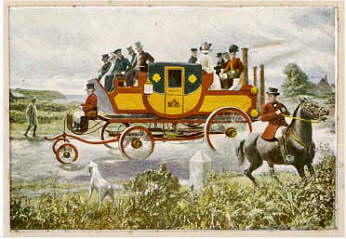
Sir Goldsworthy Gurney was one of the most under-rated inventors of the first part of the 19th century. Born in 1793 at Treator, on the outskirts of Padstow, he was educated at Truro Grammar School. While there, he met Richard Trevithick and saw his 'Puffing Devil' steam road carriage, perhaps his scientific inspiration. Studying under a Wadebridge doctor, he took over that doctor's practice at the age of 19. Aged 27, married to Elizabeth Symons of Launcells, he left for London where he created many of his inventions. Returning to Bude in 1830, he built The Castle as his home, innovatively on concrete raft foundations on sand. He died in 1875 and is buried near Bude at Launcells. Best known for his work on steam road carriages, his 1827 carriage did the journey from London to Bath and back at an average speed of 14 miles per hour. But his other work was more long lasting. He devised the high pressure steam jet which was used to clean sewers and to extinguish a Scottish mine fire that had burned for 30 years. He invented the oxy-hydrogen blowpipe, which produced limelight, used with a system of mirrors to light Parliament of 60 years. One of his inventions, the Gurney Stove, can still be seen in Ely, Durham and Peterborough cathedrals.
Gurney's steam road carriage
John