St. Newlyn East
Newlyn East
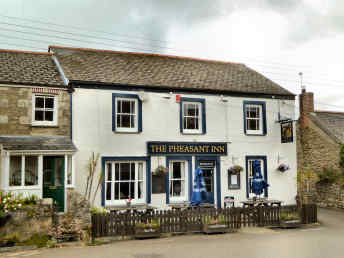
On a dull Saturday in late June 2016 I made a couple visits in the general area of Newquay - but inland. One was to re-visit St. Mawgan - or Mawgan in Pydar - while this one was effectively a first visit to St. Newlyn East. I say effectively first because, although I had been there once before, that was only to collect Jane from a 'Ladies What Lunch' date. The village centres around several cross-roads with its heart at Churchtown where the church of St. Newlina, the Pheasant Inn and the well known butcher L. George, are. The church consists of nave, south aisle, north and south transepts, porch and three-stage battlemented and pinnacled tower. A south lych gate leads to the porch and is flanked by old gravestones, a massive holly trunk growing through two. To the right of the porch a fig tree grows out of a wall. As you enter the porch, a gilded statue of St. Newlina stands above the door. Inside there are carved screens to chancel and adjacent chapel and a fine colourful ceiling to the chancel. There is an excellent collection of bench ends, some topped by heraldic figures. The carved font has coloured stone columns. The usual royal arms are of painted plaster. There is stained glass by Kempe and a 1691 monument to Lady Margaret Arundell. South of the church is L. George, renowned local butcher, whose products are served at the Pheasant Inn, where I enjoyed coffee.
Signed from A3075 Newquay - Chiverton X, just N of Rejerrah.
The Pheasant Inn, St. Newlyn East
St.
More in Towns & Villages
St. Teath
Teath
St. Tudy
Tudy
St. Winnow
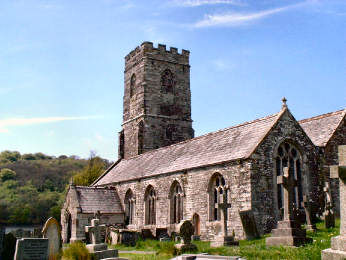
Best approached, as on the walk below, by following the Rivers Lerryn and Fowey, through broadleaf Ethy Wood and more coniferous Middle Wood. And best of all, approached in late spring when the bluebells and wild garlic proliferate, shown off at their best by the delicate new greenery of Ethy wood. St. Winnow is a tiny hamlet: just a church, a small boatyard, a couple of farms (one selling organic meats and cream teas) and a former boathouse converted to a holiday home. The setting on the River Fowey is idyllic. The church stands where St. Winnoc (some think him the same as Winwaloe) is said to have founded an oratory in around 670AD. Inside are the usual Cornish wagon roofs and some charming and unusual medieval bench ends, including a ship in full sail and a Cornishman in a kilt! There is some stained glass and the 16th century rood screen has been restored. Outside, elaborate Cornish crosses remember several Barons Vivian, local landowners. We have enjoyed cream tea from a seasonal snack shack by the farm before the return leg through the National Trust's Ethy estate. On the way you pass interesting St. Winnow Mill, which worked right up until 1940. The miller's house, listed Grade II is nearby but not very visible. Another mill, Notts Mill, halfway down the valley, on an alternative route, is now a private house.